The Risk Map Before the Outbreak
Why the July signal matters
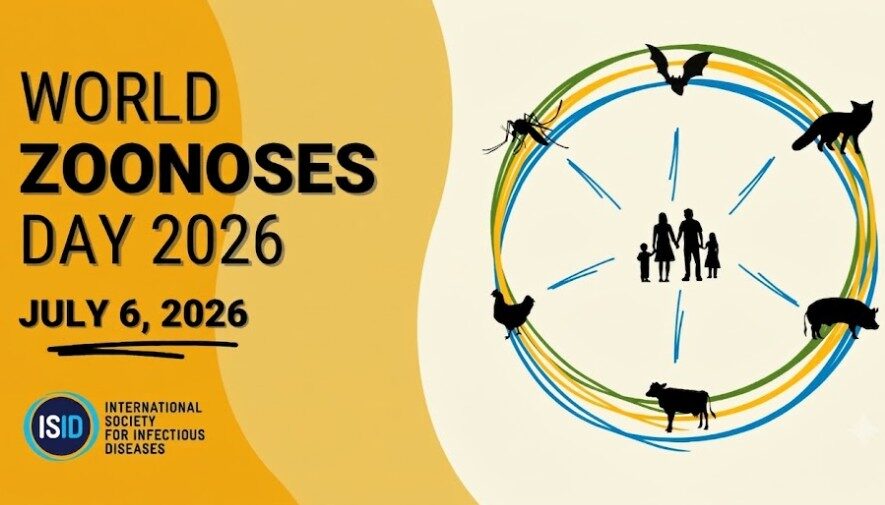
World Zoonoses Day, observed on July 6, is a reminder that prevention begins long before an outbreak is visible. The date traces back to July 6, 1885, when Louis Pasteur and colleagues administered an experimental rabies vaccine to Joseph Meister after severe dog bites [1]. For R&D leaders, public health agencies, pharma teams, IP teams, and commercialization managers, the lesson is practical: scientific readiness depends on linked evidence, not isolated activity.
CDC estimates that more than six in ten known infectious diseases in people can be spread from animals, and three in four new or emerging infectious diseases in people come from animals [2]. That makes zoonotic risk a research portfolio issue, a data workflow issue, a regulatory planning issue, and an IP strategy issue at the same time.
The evidence problem starts before product development
The common response to zoonotic threats is to accelerate discovery. Speed matters, but it is not enough. A vaccine candidate, diagnostic assay, antiviral, or veterinary intervention is only as strong as the evidence trail behind it: pathogen sequence data, host range, transmission routes, clinical outcomes, animal health records, safety data, regulatory precedent, patent literature, and freedom-to-operate signals.
A professional analogy is useful here: zoonotic preparedness works like a clean-room manufacturing line. One contaminated input can compromise the output. In this context, the contaminant is not dust. It is uncurated, late, duplicated, non-comparable, or poorly indexed data.
The One Health framework addresses this problem by linking human, animal, and ecosystem health. WHO defines One Health as an integrated approach to balance and optimize the health of people, animals, and ecosystems [3]. The FAO, UNEP, WHO, and WOAH Joint Plan of Action includes reducing risks from emerging and re-emerging zoonotic epidemics and pandemics, controlling endemic zoonotic diseases, strengthening food safety risk management, and integrating environmental evidence [4].
Case module: two prevention models
Rabies shows how mature evidence can change investment logic. WHO describes rabies as a vaccine-preventable zoonotic viral disease, with dogs responsible for up to 99 percent of human cases. Once clinical symptoms appear, rabies is virtually always fatal, yet deaths are preventable with prompt post-exposure prophylaxis [5]. WHO also states that dog vaccination, supported by dog population management, is the most cost-effective strategy for preventing rabies in people, with sustained 70 percent dog vaccination coverage shown to control canine rabies [6].
Avian influenza shows the opposite problem: the evidence base is active, moving, and operationally fragmented. WOAH describes avian influenza as a highly contagious viral disease of domestic and wild birds, with some viruses also detected in mammals and humans [7]. CDC reported that HPAI A(H5N1) in U.S. dairy cows was first reported on March 25, 2024, the first time those bird flu viruses had been found in cows; CDC also noted sporadic human cases linked to animal exposure and continued low risk to the general public as of its March 2026 situation summary [8].
These cases differ, but the management question is similar.
| Decision need | Rabies | Avian influenza |
|---|---|---|
| Main evidence task | Sustain proven prevention economics | Track changing host, farm, wildlife, and human exposure data |
| R&D implication | Improve vaccine access and delivery models | Maintain flexible vaccine, diagnostic, and surveillance platforms |
| IP implication | Protect delivery, formulation, and manufacturing improvements | Monitor strain, platform, assay, and veterinary-use patent activity |
The contrarian insight
The bottleneck is not always discovery. Often, it is decision-grade evidence.
For AI teams, this matters. Artificial Intelligence can classify literature, compare patent claims, identify sequence similarity, flag unexpected host patterns, and support Data Analytics. But AI cannot repair weak Data Management on its own. If animal surveillance records, clinical datasets, regulatory correspondence, and patent families are not curated and indexed with enough scientific precision, AI can produce faster uncertainty rather than better judgment.
For IP teams, the same discipline applies. Patentability depends on novelty, inventive step or non-obviousness, and clear claim framing. Prior art search must include scientific literature, patent publications, sequence disclosures, formulations, delivery routes, manufacturing methods, diagnostics, and adjacent veterinary technologies. Freedom-to-operate support must look beyond granted patents to pending claims, national phase entries, legal status, term, ownership, and product-use geography. Patent drafting and filing support should translate the technical contribution into claims that survive regulatory, commercial, and prior art scrutiny.
USPTO guidance on patent eligibility makes a related point: an invention is not ineligible merely because it involves a law of nature or natural phenomenon, but the claim must integrate such subject matter into a practical application [9]. For zoonotic disease technologies, that distinction can affect diagnostics, platform methods, biomarker use, and AI-supported analytical workflows.
Where Saturo Global strengthens the workflow
Saturo Global supports teams that need research, data, and IP workflows to hold up under scientific, regulatory, and commercial review. The work sits where discovery evidence becomes strategic evidence.
For R&D and public health teams, Saturo Global supports Data Curation & Management, Indexing & Abstracting, Data Visualization, and structured Data Analytics so teams can see what is known, what is changing, and where evidence is missing. For innovation, commercialization, and IP teams, Saturo Global provides Strategic Patent Support across prior art search, freedom-to-operate support, patent landscape support, patent drafting and filing support, and IP protection strategy.
Minesoft PatBase supports patent search and analysis across global patent information, while Origin brings AI-supported patent intelligence and analytics into the innovation workflow [10], [11]. Chemical Explorer helps retrieve chemical compounds from patent documents through structure, imported structure, and terminology searches, which is especially relevant for antivirals, adjuvants, formulation work, diagnostics, and chemical biology programs [12].
The practical objective is not to produce more documents. It is to reduce uncertainty before investment, regulatory submission, technology transfer, licensing, or market entry. WIPO’s work on vaccine technology transfer notes the practical role of licensing resources and business negotiation capacity in vaccine-related technology transfer [13]. That is why research evidence, data workflows, patent intelligence, and commercialization planning should be designed together.
Schedule a demo for a walkthrough of Minesoft PatBase and Origin.
References
[1] Centers for Disease Control and Prevention. 1985. Pasteur and the Modern Era of Immunization. MMWR. Link. (CDC)
[2] Centers for Disease Control and Prevention. 2025. About Zoonotic Diseases. CDC One Health. Link. (CDC)
[3] World Health Organization. 2025. One Health. WHO. Link. (World Health Organization)
[4] FAO, UNEP, WHO, and WOAH. 2022. One Health Joint Plan of Action 2022-2026. FAO. Link. (FAOHome)
[5] World Health Organization. 2024. Rabies. WHO Fact Sheet. Link. (World Health Organization)
[6] World Health Organization South-East Asia. 2024. Intradermal rabies vaccination is cost-effective. WHO. Link. (World Health Organization)
[7] World Organisation for Animal Health. 2025. Avian Influenza. WOAH. Link. (Woah)
[8] Centers for Disease Control and Prevention. 2026. A(H5) Bird Flu: Current Situation and Current Situation: Bird Flu in Dairy Cows. CDC. Link. (CDC)
[9] United States Patent and Trademark Office. 2025. MPEP 2106: Patent Subject Matter Eligibility. USPTO. Link. (USPTO)
[10] Minesoft. 2026. PatBase: Leading patent search and analysis technology. Minesoft. Link. (Minesoft)
[11] Minesoft. 2023. Minesoft releases Origin, a new AI-powered patent search solution. Minesoft. Link. (Minesoft)
[12] Minesoft. 2015. Minesoft launches Chemical Explorer for patent full-text chemical structure searching. Minesoft. Link. (Minesoft)
[13] World Intellectual Property Organization. 2023. Intellectual Property and Technology Transfer for COVID-19 Vaccines: Assessment of the Record. WIPO. Link. (WIPO)