The portfolio decisions that determine which biomedical inventions move
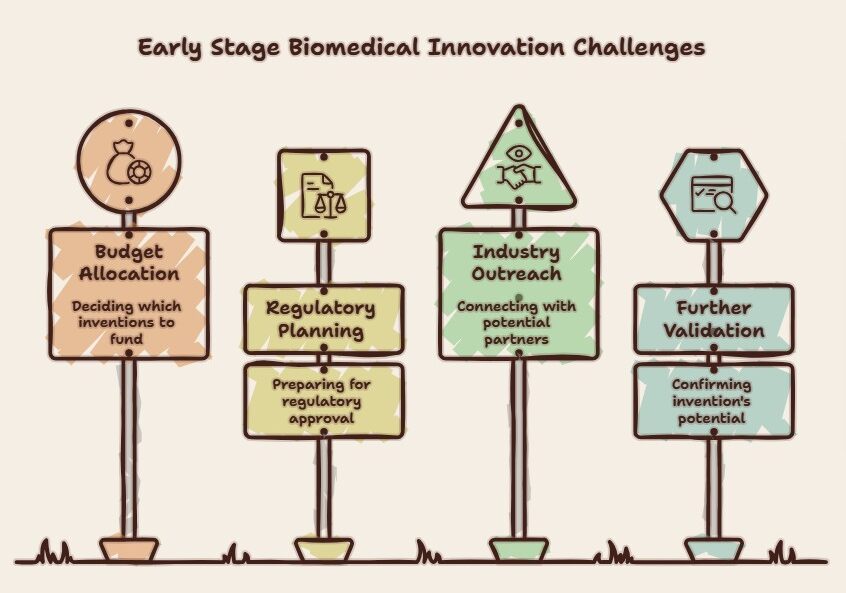
Biomedical innovation programmes are often assessed by visible outputs: patent applications filed, technologies licensed and agreements signed. Those figures matter, but they appear late in the process. The harder decisions occur earlier, when institutions must decide which inventions deserve prosecution budgets, regulatory planning, industry outreach and further validation.
This is where patent intelligence becomes part of research management rather than a legal task performed after discovery. For R&D leaders, technology-transfer offices and public research institutions, the quality of these early decisions affects investment allocation, Data Management, regulatory readiness, IP protection and the probability that an invention can move towards commercial use.
Filing capacity is no longer the whole problem
ICMR’s Medical Innovations Patent Mitra is a centralised platform for biomedical innovators. Its stated mandate includes patent filing, prosecution, maintenance, strategic management and Technology Transfer. It covers ICMR research, supported extramural projects, medical colleges, medical institutes, eligible start-ups and institution-led biomedical innovators [1][2].
That scope addresses a recognised weakness in academic innovation: researchers may have promising technical results without access to patent or commercialisation support.
The next constraint may therefore be different. Once filing assistance exists, institutions still need to compare inventions across a portfolio. A patentable idea may have little commercial separation from existing products. Another may address a neglected clinical problem but require more validation. A third may be technically strong while facing blocking patents in its intended market.
The practical distinction is:
| Existing programme mandate | Complementary intelligence layer |
|---|---|
| Patent filing and prosecution | Prior art and patentability assessment |
| Technology-transfer facilitation | Technology clustering and portfolio ranking |
| Inventor-industry connection | Partner, competitor and white-space analysis |
| Patent maintenance | FTO and jurisdiction-specific risk review |
The contrarian point is simple: adding basic filing support may duplicate an existing public programme. The larger opportunity is to improve the evidence used to decide what should be filed, developed, licensed or paused.
Build the evidence layer before prosecution
Biomedical inventions rarely arrive as clean decision packages. Evidence may be scattered across laboratory records, journal articles, patent documents, clinical datasets, regulatory guidance and investigator presentations.
Data Curation and Data Management should establish consistent terminology for diseases, targets, biomarkers, device functions, materials, formulations and intended uses. Indexing & Abstracting can then make the underlying scientific and patent records easier to retrieve and compare.
Data Analytics can group inventions by technical approach, disease area, development stage, ownership position and commercial application. Artificial Intelligence may assist semantic searching, document classification and technology clustering, but expert review remains necessary when interpreting claims, legal status, experimental evidence or regulatory significance.
A professional analogy is useful here: treat the invention portfolio like a clinical triage queue. Every case deserves attention, but urgency, evidence and the appropriate next action differ.
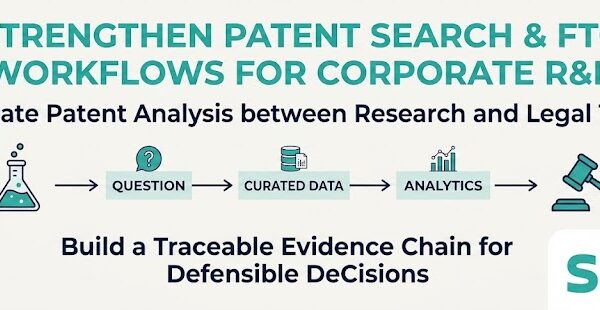
The IP sequence must also be kept clear. A Prior art search asks whether relevant technical disclosures already exist. A patentability review examines whether an invention may satisfy applicable requirements. Patent drafting and filing define the protection being requested. Freedom-to-operate asks whether commercial activity could conflict with enforceable third-party rights in the relevant jurisdiction. These are connected questions, but one does not answer the others.
Regulatory strategy should enter the same workflow. Intended use, product classification, validation requirements and manufacturing pathway can alter commercial value and the claims worth pursuing. Patent protection built around a research concept that cannot support the intended regulatory or market pathway may consume resources without improving transfer prospects.
Use transfer activity as portfolio feedback
Verified case: 41 technologies enter industry pathways
On 25 May 2026, ICMR held its Innovators-to-Industry Connect event in New Delhi. The event transferred 41 public-health technologies from ICMR institutes and innovators to industry partners for further development, manufacturing and commercialisation [3].
The transferred assets included diagnostics, vaccines, medical devices and other biomedical technologies. Examples cited by the government included vaccine technologies for typhoid and paratyphoid and diagnostics relating to Japanese encephalitis, tuberculosis and Mpox. More than 100 technologies were presented during the event [3].
This is more than a transaction count. It creates a useful basis for portfolio analysis. Institutions can examine which technology classes attracted industry interest, what evidence was available at transfer, which inventions required further development and where clusters of similar technologies may compete for the same partners.
Regional extension into academic inventions
A March 2026 agreement between ICMR and the Tamil Nadu State Council for Science and Technology extended the initiative into academic biomedical inventions. Reported activities include patent facilitation, inventor-investor connections and commercialisation support [4].
As participation widens, portfolio comparison becomes more important. Without common taxonomies and review criteria, similar inventions may be assessed separately, technical overlap may be missed and scarce prosecution resources may be spread across low-priority assets.
Where specialist support adds value
WIPO guidance notes that research institutions use portfolio evaluation to focus commercialisation resources on promising intellectual property. Patent landscape reports can also inform R&D investment, prioritisation and Technology Transfer [5][8].
Saturo Global can support this complementary layer through Data Curation & Management, Indexing & Abstracting, Strategic Patent Support and Data Visualization. Its work can help structure biomedical patent landscapes, cluster technologies, compare portfolios and present findings to research, IP and commercialisation teams.
Saturo Global’s Indian Patent Database provides historical Indian patent records from 1912 onward, with manually curated records from 2013 onward. Its stated applications include FTO, invalidation analysis, competitive benchmarking and R&D white-space assessment [6]. Strategic Patent Support covers prior art search, freedom-to-operate support, patent landscape support, portfolio analysis, and patent drafting and filing support [7].
PatBase can support broader patent-family searching and analysis. Origin adds AI-assisted patent discovery and review. Chemical Explorer supports chemistry-focused searching within patent documents [9][10][11]. Used with expert analysis, these tools can strengthen patentability reviews, IP protection strategy and commercialisation planning without reproducing the filing and transfer functions already provided by the public programme.
Schedule a demo for a walkthrough of Minesoft PatBase and Origin.
References
[1] Indian Council of Medical Research. 2026. Medical Innovations Patent Mitra. Medical Innovations Patent Mitra Portal.
[2] Indian Council of Medical Research. 2026. About Medical Innovations Patent Mitra. Medical Innovations Patent Mitra Portal.
[3] Press Information Bureau, Government of India. 2026. Indian Council of Medical Research Organizes India’s Largest Biomedical Innovation and Technology Transfer Event. Ministry of Health and Family Welfare.
[4] ETHealthworld. 2026. TN Council for Science Partners with ICMR for Biomedical Research. The Economic Times.
[5] World Intellectual Property Organization. 2025. Intellectual Property Valuation Basics for Technology Transfer Professionals. WIPO.
[6] Saturo Global. 2026. Indian Patent Database. Saturo Global.
[7] Saturo Global. 2026. Strategic Patent Support. Saturo Global.
[8] World Intellectual Property Organization. 2015. Guidelines for Preparing Patent Landscape Reports. WIPO Publication No. 946.
[9] Minesoft. 2026. PatBase: Leading Patent Search and Analysis Technology. Minesoft.
[10] Minesoft. 2026. Minesoft Origin: Advanced AI Patent Search. Minesoft.
[11] Minesoft. 2015. Minesoft Launches Chemical Explorer for Patent Full-Text Chemical Structure Searching. Minesoft.