Turning inherited-risk screening into decision-ready health intelligence
Why this belongs on the R&D agenda
Sickle cell disease is not only a clinical condition. It is a test of whether health systems can convert genetic risk into earlier diagnosis, better care pathways, usable data, and responsible innovation. The United Nations recognized sickle-cell anaemia as a public health problem and urged awareness on 19 June each year, with attention to treatment access, national programmes, specialist centres, and research [1].
The science is well understood at a basic level. Sickle cell disease is inherited, affects haemoglobin, and can make red blood cells hard, sticky, and sickle-shaped, leading to pain, anaemia, infection risk, stroke, and other complications [2]. Early diagnosis matters because children can enter care before avoidable complications accumulate [2]. For R&D leaders, the harder question is not whether the biology is important. It is whether screening, data, clinical follow-up, and IP strategy are being designed as one connected system.
The scale is a data problem before it is a treatment problem
Global estimates from the Global Burden of Disease Study 2021 reported 7.74 million people living with sickle cell disease in 2021, up from 5.46 million in 2000 [3]. India is central to this discussion. A 2024 Lancet Haematology correspondence states that India has among the highest haemoglobin S allele frequencies in the world and the third-highest birth rate for babies born with HbSS [4].
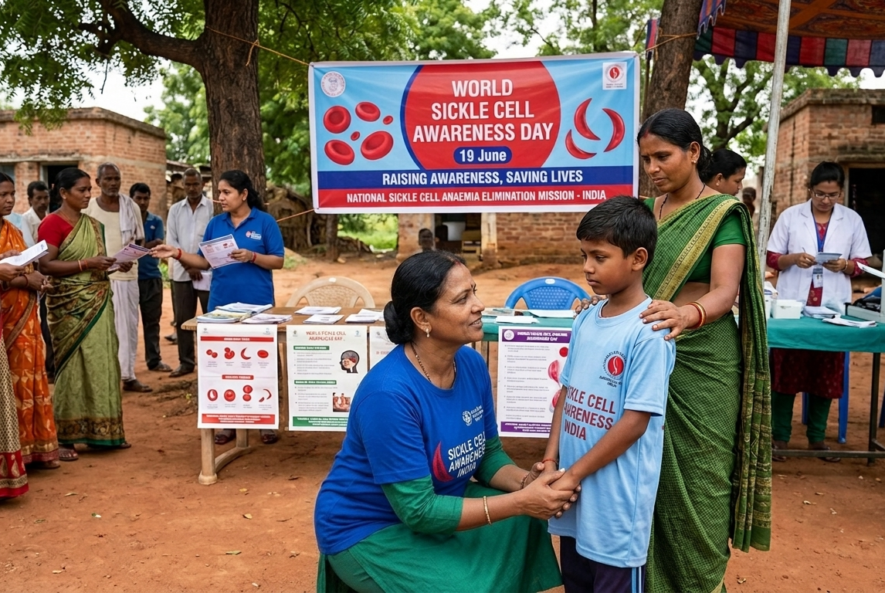
India’s National Sickle Cell Anaemia Elimination Mission gives the issue a defined implementation frame. Launched in July 2023, the mission targets elimination of sickle cell anaemia by 2047, focuses on tribal communities, and originally targeted screening of about seven crore people under 40 years of age across high-burden districts [5]. By 19 June 2026, India’s President said the seven crore screening target had been achieved ahead of schedule, with approximately 2.5 lakh people detected with the disease and more than 20 lakh carriers identified [6].
That is a large public health achievement. It is also a warning. Screening without structured data management, counselling, referral, longitudinal follow-up, and privacy-safe analytics risks becoming a one-time event instead of a care system.
Discovery, curation, and analytics need the same operating model
A national screening programme works like a patent landscape. A single record has limited value. Patterns emerge only when records are cleaned, classified, connected, and interpreted.
| Workflow layer | What it must answer | Why it matters |
| Discovery | Who is affected or at risk? | Supports early diagnosis, counselling, and cohort design |
| Data Curation | Are test results complete and comparable? | Reduces duplication, errors, and missed follow-up |
| Data Management | Can patients move through care pathways? | Links screening to treatment, referral, and outcomes |
| Data Analytics and AI | Which patterns need action? | Helps identify geographic clusters, adherence gaps, and research priorities |
Artificial Intelligence can support image analysis, triage models, cohort stratification, and operational forecasting, but only where input data are reliable, representative, and governed. In inherited disorders, biased or incomplete data can misdirect resources. The contrarian insight is simple: the frontier therapy will not help the population if the basic data layer is weak. The Lancet Haematology Commission argued that simple, effective interventions exist and that inequality is a major obstacle to better outcomes [8]. That is a systems lesson, not a footnote.
A verified case module: advanced therapy changes the IP question
In December 2023, the US FDA approved Casgevy and Lyfgenia as the first cell-based gene therapies for sickle cell disease in patients 12 years and older. Casgevy was also the first FDA-approved therapy using CRISPR/Cas9 genome editing [7]. The FDA described both products as autologous therapies involving modified blood stem cells and myeloablative conditioning before infusion [7].
This case changes how innovators should think about commercialization. It is not enough to assess clinical promise. Teams need regulatory strategy, manufacturing readiness, payer evidence, long-term safety planning, and patient access design. They also need a disciplined IP strategy. WIPO has described CRISPR-Cas as a complex and expanding patent field, with more than 11,000 CRISPR-related patent families filed [9]. For research teams, that means patentability analysis, prior art search, freedom-to-operate review, patent drafting and filing support, and IP protection strategy should begin before clinical translation decisions harden.
Technology transfer needs evidence, not enthusiasm
University labs, hospitals, public health programmes, and biotech firms each see a different part of the same problem. Technology Transfer teams have to connect them. For diagnostics, that means validating performance in the target population, not only in ideal laboratory conditions. For therapeutics, it means mapping regulatory expectations, manufacturing constraints, and post-approval evidence needs. For digital tools, it means proving that a model improves decisions without creating new inequities.
The strongest innovation pathway is therefore practical: combine screening data, curated disease registries, clinical outcomes, patent intelligence, and regulatory evidence into one decision workflow. That gives R&D and IP teams a clearer view of where to invest, what to protect, what to license, and where freedom-to-operate risks may sit.
How Saturo Global supports the workflow
Saturo Global supports research, data, and IP teams that need evidence-ready workflows in complex scientific domains. Our services include Data Curation & Management, Indexing & Abstracting, Strategic Patent Support, PatBase, Origin, Chemical Explorer, and Data Visualization. For sickle cell disease and adjacent genetic-disease innovation, this can support prior art search, freedom-to-operate support, patent landscape support, patent drafting and filing support, and IP protection strategy.
The goal is not to turn every scientific signal into a patent filing or every dataset into a dashboard. The goal is to help teams decide what is defensible, fundable, protectable, and useful for patients and health systems. Schedule a demo for a walkthrough of Minesoft PatBase and Origin.
References
[1] United Nations General Assembly. 2009. Recognition of sickle-cell anaemia as a public health problem. United Nations Digital Library. Link. (United Nations Digital Library System)
[2] Centers for Disease Control and Prevention. 2025. About Sickle Cell Disease. CDC. Link. (CDC)
[3] GBD 2021 Sickle Cell Disease Collaborators. 2023. Global, regional, and national prevalence and mortality burden of sickle cell disease, 2000-2021. The Lancet Haematology. DOI: 10.1016/S2352-3026(23)00118-7. (PubMed)
[4] Jain D, Gupta M, Madkaikar M, et al. 2024. Sickle cell disease in India: current status and progress. The Lancet Haematology. DOI: 10.1016/S2352-3026(24)00109-1. (The Lancet)
[5] Ministry of Health and Family Welfare, Government of India. 2023. Prime Minister launches National Sickle Cell Anaemia Elimination Mission. Press Information Bureau. Link. (Press Information Bureau)
[6] President’s Secretariat, Government of India. 2026. President of India graces International Sickle Cell Day commemoration at Omkareshwar, Madhya Pradesh. Press Information Bureau. Link. (Press Information Bureau)
[7] US Food and Drug Administration. 2023. FDA Approves First Gene Therapies to Treat Patients with Sickle Cell Disease. FDA. Link. (U.S. Food and Drug Administration)
[8] Piel FB, Rees DC, DeBaun MR, et al. 2023. Defining global strategies to improve outcomes in sickle cell disease: a Lancet Haematology Commission. The Lancet Haematology. DOI: 10.1016/S2352-3026(23)00096-0. (WashU Research Profiles)
[9] World Intellectual Property Organization. 2024. CRISPR-Cas: Navigating the Patent Landscape to Explore Boundless Applications. WIPO. Link. (WIPO)