World Autism Awareness Day 2026: What R&D Leaders and IP Teams Should Do With the Data
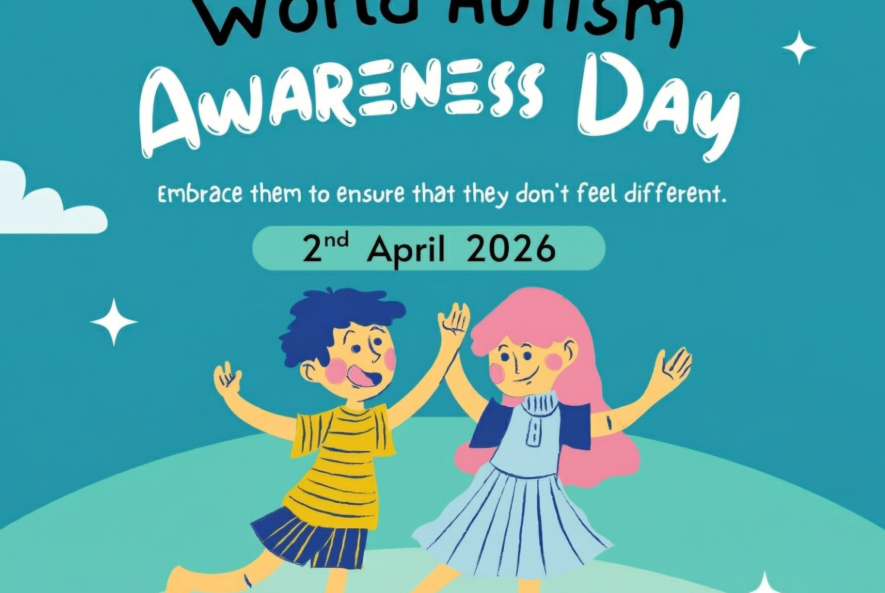
World Autism Awareness Day on 2 April 2026 is not just a calendar marker. This year’s UN theme, “Autism and Humanity – Every Life Has Value,” puts dignity, inclusion, and equal worth at the center of the conversation. The WHO’s 2026 observance page takes that a step further, calling for neuroinclusive environments across health, education, work, and sport. For a mixed executive audience, that changes the question. The issue is no longer whether autism matters to innovation strategy. It is whether R&D systems are built to produce evidence, products, and IP that reflect autistic lives as they are actually lived.[1][2]
A useful analogy comes from assay design. A lab can run a flawless test and still get a misleading result if the sample set is poorly defined. Autism innovation works the same way. Sophisticated analytics, large datasets, and strong patent activity do not automatically produce useful outcomes if the cohorts, endpoints, and design assumptions flatten the diversity of autistic experience.[3][4]
That matters because autism is not a narrow research category. WHO describes autism as a diverse group of conditions related to brain development. The CDC’s latest surveillance estimate reported that 1 in 31 8-year-old children in its 2022 monitoring network were identified with autism. At the same time, major reviews of autism drug development still point to familiar barriers: heterogeneity, lack of validated biomarkers, and weak or inconsistent endpoints for core features.[3][5][6]
The real bottleneck is not discovery
A common assumption is that autism innovation is mainly constrained by scientific discovery. The stronger reading of the evidence is less flattering. In many cases, the bigger constraint is translation. Research can generate signals, targets, and candidate tools, yet still fail to convert them into clinically useful interventions, scalable services, or durable commercial assets because the evidence base does not travel well across settings.[4][6]
That has direct consequences for Data Management, Data Analytics, regulatory planning, and patent strategy.
| Lens | Typical posture | Strategic consequence |
|---|---|---|
| Awareness | Visibility campaigns and symbolic recognition | Useful for culture, weak for product decisions |
| Inclusion in research | Autistic input in study design and outcome selection | Better endpoint relevance and stronger adoption logic |
| Evidence architecture | Better cohort definition, provenance, subgrouping, and reproducibility | Stronger translation, regulatory credibility, and more defensible IP |
The contrarian point is simple: in autism, inclusion is not a communications layer added after the science. It is part of the science. FDA’s patient-focused drug development framework states that patient and caregiver input should inform medical product development and regulatory decision-making. Its autism meeting materials show why that matters in practice: there are treatments for associated symptoms such as irritability, but no approved drugs that target the core manifestations of autism, and patient perspectives are needed to clarify what meaningful benefit looks like.[7][8][9]
What R&D leaders should change
For R&D leaders and researchers, the first priority is better subgroup logic. Autism research has long struggled with within-group and between-group heterogeneity. Molecular Psychiatry’s review on big data in autism argues that this heterogeneity cuts across genotype, phenotype, development, and treatment response, and that understanding it is essential for translational progress.[4] That means teams should treat data curation as a scientific task, not back-office hygiene. Phenotype detail, metadata consistency, outcome provenance, and missing-data handling are all part of research quality.[4][6]
For innovation managers, the second priority is outcome discipline. If teams optimize around what is easiest to measure, they often end up with results that are technically publishable but commercially weak. The Lancet Commission on autism argued that future care and clinical research should be more useful to autistic people and their families, not just better aligned with legacy research habits.[10] That is especially relevant for digital tools, diagnostics, and service models, where product teams can mistake engagement metrics for meaningful utility.[10]
What IP counsel should change
For IP counsel, the lesson is equally practical. In autism-related innovation, prior art search, Freedom-to-operate, and patent drafting and filing should reflect scientific uncertainty, not ignore it. Broad claims tied to unstable subgroup logic or thin biomarker evidence may look attractive early, but they can become fragile when validation standards tighten or translational pathways shift.[4][6][11]
A better approach is to anchor claims in reproducible methods, defined patient cohorts, validated workflows, or clearly delimited use cases. That is less glamorous than sweeping platform language, but it often produces stronger protection. In autism innovation, weak evidence architecture can leak into the patent file. The commercial problem and the IP problem are often the same problem wearing different clothes.[4][6]
What this means for Saturo Global clients
For organizations working across R&D, Innovation, Technology Transfer, and IP protection, the response should be operational.
Saturo Global’s Data Curation & Management can help structure autism-related evidence so that data remains usable across discovery, regulatory, and commercial teams. Indexing & Abstracting helps turn scientific and patent literature into decision-ready knowledge. Strategic Patent Support strengthens prior art search, portfolio positioning, monitoring, and freedom-to-operate analysis. Your internal product notes position PatBase as the professional-grade platform for complex patent search, legal status, citation analysis, alerts, and analytics, while Minesoft Origin is positioned for natural-language discovery, AI summaries, and collaborative review across mixed teams. Those distinctions are especially relevant in autism-related programs where scientific nuance and cross-functional interpretation matter as much as search depth.
World Autism Awareness Day 2026 should not leave corporate teams with a softer message. It should leave them with a harder standard. Better autism innovation depends on better evidence design, better translation discipline, and better IP judgment. That is how awareness becomes useful.[1][2][4][10]
Schedule a demo for a walkthrough of Minesoft PatBase and Origin.
References
[1] United Nations (2026). World Autism Awareness Day. United Nations.
[2] World Health Organization (2026). World Autism Awareness Day 2026. WHO.
[3] World Health Organization (2025). Autism. WHO Fact Sheet.
[4] McCracken, J.T. et al. (2021). Drug development for Autism Spectrum Disorder (ASD). European Neuropsychopharmacology.
[5] CDC (2025). Data and Statistics on Autism Spectrum Disorder and ADDM surveillance summary. Centers for Disease Control and Prevention.
[6] Frye, R.E. et al. (2019). Emerging biomarkers in autism spectrum disorder. Annals of Translational Medicine.
[7] Pickles, A. et al. (2021/2022). The Lancet Commission on the future of care and clinical research in autism. The Lancet.
[8] Pukki, H. et al. (2022). Autistic Perspectives on the Future of Clinical Autism Research. Molecular Autism.
[9] Lombardo, M.V. et al. (2019). Big data approaches to decomposing heterogeneity across the autism spectrum. Molecular Psychiatry.
[10] U.S. Food and Drug Administration (2025). Patient-Focused Drug Development Guidance Series. FDA.
[11] U.S. Food and Drug Administration (2017). The Voice of the Patient: Autism and PFDD meeting materials. FDA.
[12] United Nations General Assembly (2007/2008). A/RES/62/139. United Nations.