Scaling R&D for 300 Million Patients: Resolution on Rare Disease Day 2026
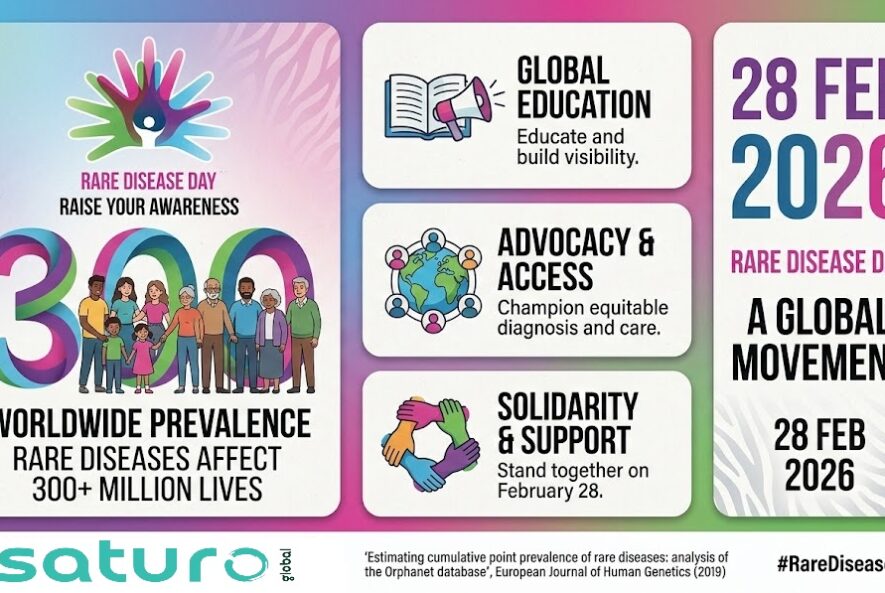
According to EURORDIS, more than 300 million people worldwide live with over 6,000 to 7,000 rare diseases. Rare Disease Day 2026 reinforces a clear message for biotech leaders: fragmented science, small cohorts, and conventional trial models are not fit for scale.
Patient Reality Signals Structural R&D Gaps
Rare Disease Day 2026 campaigns led by EURORDIS and the ERN EURO-NMD highlight lived experiences that mirror systemic R&D bottlenecks. Patient advocates from Asia, North America, and Europe report years to diagnosis, disrupted education and employment, and limited access to trials.
For R&D leaders, these narratives translate into measurable issues:
- Delayed genetic confirmation limits trial readiness
- Fragmented data slows target validation
- Underpowered cohorts challenge statistical endpoints
Data analytics, real world evidence integration, and federated registries are increasingly used to map these patterns and shorten diagnostic and development timelines.
Rare Diseases as Long Tail Markets
Rare diseases resemble long tail markets: each condition affects a small population, but collectively they represent a substantial global burden. The implication for R&D strategy is clear:
- Precision targeting replaces mass market blockbusters
- Portfolio breadth becomes a strategic advantage
- Platform technologies outperform single asset bets
Orphan drug frameworks in the United States and Europe have validated this model through regulatory exclusivity incentives and priority review pathways.
Drug Discovery: AI and Genomics at the Core
Genomic sequencing has established that roughly 80 percent of rare diseases have a genetic origin, as reported by EURORDIS. AI driven target identification platforms now scan genomic, transcriptomic, and proteomic datasets to identify overlooked disease mechanisms.
Market analyses, including those from Global Market Insights, document accelerating adoption of AI in rare disease drug discovery, particularly for:
- Variant interpretation
- Target prioritization
- Drug repurposing
Data curation and structured knowledge management remain critical because sparse datasets increase signal to noise risk.
Preclinical and Clinical Innovation
Small patient populations require adaptive design and real world data augmentation.
On February 23, 2026, the U.S. Food and Drug Administration hosted its Rare Disease Day public meeting, addressing the use of AI, real world evidence, and regulatory flexibility in rare disease development. FDA guidance supports single arm trials and surrogate endpoints in ultra rare conditions when randomized designs are infeasible.
On February 27, 2026, the National Institutes of Health Rare Disease Day event, including participation from the Rare Diseases Clinical Research Network, highlighted decentralized trials and patient centered outcome measures.
In Europe, EURORDIS and associated networks continue to emphasize cross border collaboration and equity in trial access.
Manufacturing and CMC Constraints
Rare disease therapeutics, particularly gene and cell therapies, introduce scale mismatches:
| Challenge | Operational Constraint | Strategic Response |
| Small batch sizes | High per unit cost | Flexible single use bioreactors |
| Yield variability | Product loss risk | In silico process modeling |
| Global trial distribution | Regulatory heterogeneity | Early cross functional alignment |
Industry discussions, including commentary cited by regulatory and manufacturing experts, emphasize quality by design frameworks and modular manufacturing to reduce contamination risk and CMC delays.
Regulatory Incentives and Orphan Policy
The FDA Orphan Drug framework continues to provide exclusivity incentives. The Rare Pediatric Disease Priority Review Voucher program has seen renewal activity, as covered by regulatory policy reporting.
Additionally, the FDA has launched a framework to accelerate individualized therapies, signaling regulatory support for platform based rare disease innovation.
In Europe, alliance based models supported by EURORDIS reinforce coordinated access strategies across member states.
Global Momentum: Rare Disease Day 2026
Rare Disease Day 2026 includes:
- “Light Up for Rare” campaigns coordinated through patient advocacy networks
- The “Racefor7” initiative in India supporting awareness of 7,000 rare diseases
- FDA and NIH public forums focused on data, AI, and patient engagement
These events reinforce a unified message: scale does not come from volume per disease, but from systemic coordination across thousands of conditions.
Strategic Imperative for Biotech Leaders
Rare disease pipelines are expanding through AI partnerships, real world data integration, and regulatory flexibility. The bottleneck is no longer scientific plausibility alone, but infrastructure:
- Structured data management
- Cross functional regulatory strategy
- Adaptive manufacturing platforms
- Integrated IP and patent positioning
Organizations such as Saturo Global position services around data curation, indexing, abstracting, patent support, and visualization to support rare disease R&D workflows.
Conclusion
Rare Disease Day 2026 underscores a structural reality: 300 million patients represent neither a niche nor a philanthropic side project. Rare disease R&D demands platform thinking, regulatory fluency, AI enabled discovery, and manufacturing redesign.
The scale exists. The constraint is coordination.