National Science Day 2026: Women Driving Biotech and Pharma R&D Forward
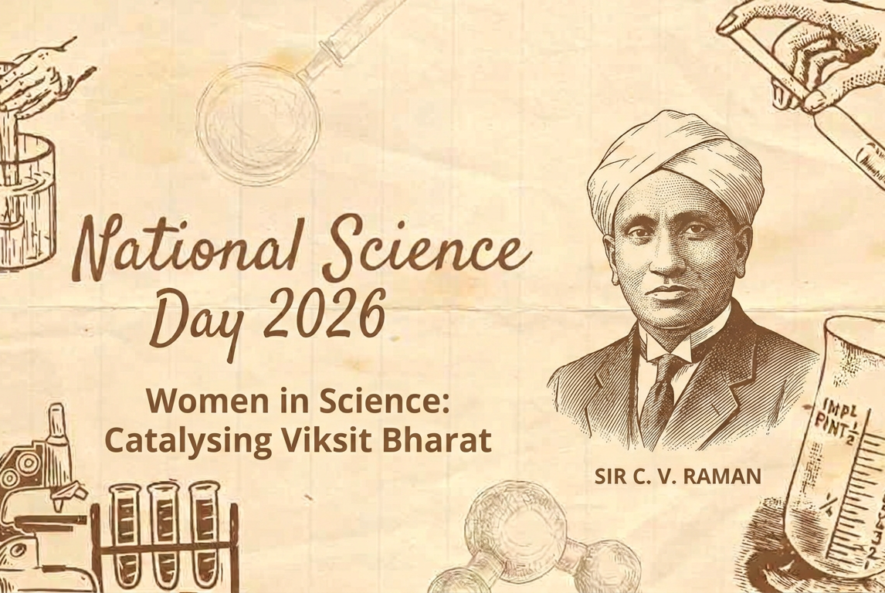
India observes National Science Day on 28 February 2026, commemorating the 1928 discovery of the Raman Effect by C. V. Raman. The 2026 theme, “Women in Science: Catalysing Viksit Bharat,” highlights the role of women in advancing India’s scientific and innovation ecosystem. The Department of Science and Technology is hosting the national celebration at Vigyan Bhawan.
Biotech Leadership and the Gender Gap
India’s pharmaceutical and biotechnology sectors face increasing pressure to accelerate innovation. While women account for a significant share of STEM PhDs in India, their representation in senior scientific and leadership roles remains disproportionately low. The 2026 theme directly addresses this structural gap.
The India RISE Fellowship, launched in January 2026, supports 41 women in STEMM disciplines, including biotechnology. The program was launched at Indian Institute of Science and is designed to strengthen research careers and leadership pathways for women scientists.
India’s long-term development vision, Viksit Bharat 2047, positions science-led growth as central to achieving developed-nation status. Industry leadership reflects this trajectory. Under the leadership of Suchitra Ella, Bharat Biotech developed Covaxin, demonstrating the global competitiveness of Indian biotech innovation.
The Raman Legacy in Modern Drug Discovery
Raman’s work on molecular light scattering laid foundational principles for spectroscopic analysis. These principles underpin modern analytical techniques used in drug discovery, including molecular characterization and structural validation.
Drug discovery today mirrors Raman’s methodical search for molecular signatures. Where Raman investigated crystalline structures through light interactions, contemporary researchers interrogate biological targets using high-throughput sequencing, computational modeling, and artificial intelligence.
Women Pioneers in Biomedical Science
Kamala Sohonie made foundational contributions to nutrition science and remains one of India’s earliest women biochemists. Contemporary researchers continue this trajectory. At Indian Institute of Technology Delhi, Dr. Shalini Gupta and her team developed SeptifloTM, a diagnostic innovation targeting sepsis detection.
Women scientists across institutions, including those supported by Indian Council of Medical Research, are advancing biomarker refinement and translational research.
Evolving Drug Development Models
| Stage | Traditional Model | Modern Approach |
|---|---|---|
| Drug Discovery | Manual compound screening | AI-driven omics and target identification |
| Preclinical | Animal-only models | Organoids and organ-on-chip systems |
| Regulatory | Sequential review cycles | Data-optimized submissions |
Regulatory oversight by the Central Drugs Standard Control Organisation increasingly emphasizes robust datasets and accelerated pathways for strong scientific submissions.
Technology transfer mechanisms now enable universities and public research institutions to license innovations to pharmaceutical partners, accelerating commercialization.
Biologics Manufacturing and Scale-Up
Biologics production demands stringent sterility and process control. Modern bioreactor systems integrate real-time sensors to reduce contamination risk and optimize yield. Scaling diagnostic technologies, including sepsis detection platforms such as Nano DX systems, reflects the broader push toward indigenous biomedical manufacturing.
Digital Infrastructure Supporting R&D
R&D acceleration depends on data infrastructure and knowledge systems. Platforms such as Saturo Global provide:
-
Data curation of omics datasets
-
Indexing of scientific literature and patent portfolios
-
Intellectual property landscape analysis
-
Visualization dashboards for strategic decision-making
These tools support translational research, regulatory preparedness, and competitive positioning.
Breakthroughs Ahead
Capacity-building initiatives such as SheSTEM workshops are expanding participation among young women in science. Cross-sector partnerships between academia, regulators, and industry are strengthening approval pipelines and translational pathways.
National Science Day 2026 reinforces a central message: India’s ambition for Viksit Bharat 2047 depends on fully integrating women into leadership across biotechnology, pharmaceuticals, and advanced research domains.