From Herd Records to Defensible Dairy Innovation
The signal for R&D teams
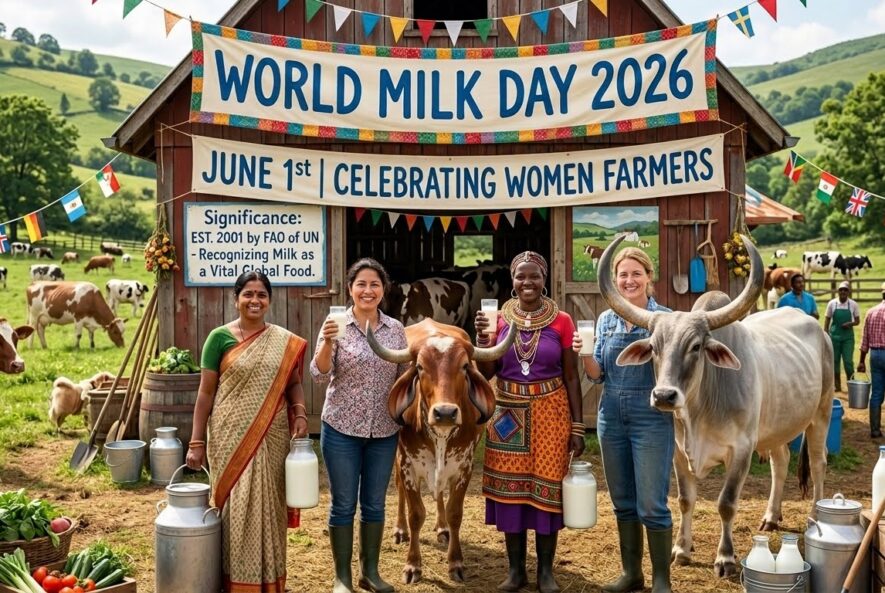
World Milk Day 2026 arrived on June 1 with the theme “Celebrating Women Farmers.” The message matters beyond communications calendars. For dairy R&D leaders, food technology teams, IP groups, and sustainability teams, it points to a practical question: can the sector turn everyday farm, processing, quality, and market data into better research choices and stronger patent positions? FAO initiated World Milk Day in 2001, and the 2026 platform placed women farmers at the center of the discussion [1][2].
That is not a soft issue. FAO notes that women in many rural dairy systems are closely involved in milking, feeding, collection, processing, and marketing, while much of their labor remains non-monetized [3]. If their work is missing from datasets, discovery programs start with blind spots. The result can be weak product briefs, avoidable duplication, poor technology transfer decisions, and patents that fail because the prior art search was too narrow.
Where the next research questions are hiding
Dairy innovation is often described through products: functional milk, clean-label ingredients, precision fermentation, cold-chain systems, diagnostics, packaging, and animal-health tools. The harder work sits underneath those products. R&D teams need well-curated evidence on milk composition, animal health, feed, climate exposure, microbial quality, consumer requirements, processing performance, and regulatory constraints.
A useful analogy is a dairy cooperative ledger. If the entries are late, inconsistent, or incomplete, the payment conversation becomes disputed. The same logic applies to innovation. Poor data curation makes an AI model look confident while leaving the R&D team unable to defend the decision.
For decision makers, the workflow should begin with discovery and data curation, then move into Data Management, Data Analytics, Artificial Intelligence, and patent intelligence. AI can help classify signals, compare documents, and find hidden relationships, but it cannot repair weak source design by itself. In dairy, that means tagging data by geography, breed, gender participation, processing method, formulation, storage condition, assay method, and regulatory use case.
The data-to-IP bridge
The strongest dairy R&D portfolios connect technical evidence to patent evidence early. WIPO lists novelty, inventive step or non-obviousness, industrial application or utility, patentable subject matter, and sufficiency of disclosure as core patentability conditions [7]. The European Patent Office similarly frames patent protection around novelty, inventive step, and industrial applicability [8].
That matters for food technology because many ideas sound new in a meeting but look old in patent literature. A probiotic formulation, enzyme-assisted process, methane-reduction feed additive, milk-quality sensor, or digital herd-health model may require a prior art search before serious investment. Freedom-to-operate work then asks a different question: not “can we patent this?” but “can we commercialize this without colliding with active rights in target markets?”
| Innovation question | Data workflow | IP workflow |
| Is this technically different? | Curate assay, formulation, process, and field data | Prior art search and patentability review |
| Can it be scaled? | Compare cost, quality, safety, and supply variables | Patent landscape and licensing scan |
| Can it enter target markets? | Map regulatory and commercialization data | Freedom-to-operate support |
| Should it be filed? | Validate reproducibility and ownership | Patent drafting and filing support |
The contrarian insight is simple: some of the best IP work prevents filings. WIPO warns that prior art can make a patent application impossible to obtain and that public disclosure before filing can destroy novelty in many jurisdictions [7]. For dairy companies, stopping a weak filing is not failure. It protects budget, avoids false confidence, and redirects research toward claims that can survive examination.
Verified case module: India’s digital dairy curve
India is a useful example because it combines scale, cooperatives, public digital infrastructure, and smallholder participation. India’s Department of Animal Husbandry and Dairying reported 239.30 million tonnes of milk production in 2023-24, compared with 230.58 million tonnes in 2022-23 [5]. The same report states that India’s cooperative sector included 22 milk federations, 241 district cooperative milk unions, 28 marketing dairies, and 25 milk producer organizations covering about 2.35 lakh villages and 1.72 crore dairy-farmer members [5].
The data layer is also visible. The Department, with NDDB, developed the Bharat Pashudhan database using a unique 12-digit tag ID for livestock animals; the annual report states that 34.12 crore animals had been registered [5]. NDDB’s e-GOPALA application was described by NDDB as providing real-time information to dairy farmers for productivity-related decisions [6].
For global R&D leaders, the lesson is not that every market should copy India. The lesson is that dairy innovation becomes more investable when animal identity, farmer services, quality records, breeding data, and market data can be connected. For IP teams, those links help define the invention, identify prior art, support patent drafting and filing, and plan IP protection across jurisdictions.
From research output to protected opportunity
Technology Transfer in dairy should not begin after publication or pilot completion. WIPO describes technology transfer as a process that includes identifying and disclosing innovation, assessing and securing IP, developing and de-risking innovation, and building a commercialization strategy [9]. That sequence is especially relevant to dairy R&D, where inventions may sit across biological materials, processes, equipment, software, formulations, packaging, and quality-control methods.
The practical move is to build an evidence map before the claim set. One lane tracks scientific and operational data. A second lane tracks patents, publications, standards, filings, and competitor activity. A third lane tracks markets and regulatory constraints. When these lanes are linked, patent intelligence becomes part of the research system rather than a late-stage legal check.
How Saturo Global supports the workflow
Saturo Global supports research, data, and IP workflows for teams working across dairy innovation and food technology. The work can include Data Curation & Management, Indexing & Abstracting, Strategic Patent Support, PatBase, Origin, Chemical Explorer, and Data Visualization.
For dairy R&D and IP teams, that support can help structure prior art search, freedom-to-operate support, patent landscape support, patent drafting and filing support, and IP protection strategy. The goal is not to make every idea look patentable. It is to help teams decide what to pursue, what to protect, what to license, and what to stop before costs rise.
Schedule a demo for a walkthrough of Minesoft PatBase and Origin.
References
[1] Food and Agriculture Organization of the United Nations. n.d. “World Milk Day.” FAO Markets and Trade. Link. (FAOHome)
[2] World Milk Day Platform. 2026. “World Milk Day: Celebrating Women Farmers.” WorldMilkDay.org. Link. (World Milk Day)
[3] Food and Agriculture Organization of the United Nations. n.d. “Social and Gender Issues.” FAO Dairy Production and Products. Link. (FAOHome)
[4] Food and Agriculture Organization of the United Nations. 2024. “Milk and Milk Products.” Food Outlook. Link. (Open Knowledge FAO)
[5] Department of Animal Husbandry and Dairying, Government of India. 2025. “Annual Report 2024-25.” Ministry of Fisheries, Animal Husbandry and Dairying. Link. (Animal Husbandry & Dairying)
[6] National Dairy Development Board. 2021. “Union Minister Launches Web Version of NDDB-developed e-GOPALA Application & IMAP Web Portal.” NDDB. Link. (NDDB)
[7] World Intellectual Property Organization. n.d. “How to Protect Inventions through Patents.” WIPO. Link. (WIPO)
[8] European Patent Office. n.d. “Is It Patentable?” EPO. Link. (EPO)
[9] World Intellectual Property Organization. n.d. “Knowledge and Technology Transfer.” WIPO. Link. (WIPO)